
Lab-Grown Diamonds vs. Moissanite: How to Choose Your Center Stone

Two stones dominate engagement ring shopping right now, and they are frequently confused. Lab-grown diamonds and moissanite are both brilliant, both affordable next to mined diamonds, and both sit in solid gold settings that look identical online.
They are not the same stone. Here is the honest comparison.
What they actually are
A lab-grown diamond is a diamond. Same carbon crystal structure, same optical and physical properties as a mined diamond, created in weeks rather than over a billion years. A gemologist needs specialist equipment to distinguish one from a mined stone, and it grades on the same 4Cs scale with the same IGI or GIA certificates.
Moissanite is silicon carbide, a different mineral. It was discovered in a meteorite crater and is now grown in labs. It is a diamond alternative, not a diamond, and anyone who tells you otherwise is being loose with the truth.
Sparkle: different, not better or worse
Moissanite has a higher refractive index than diamond, 2.65 versus 2.42, which produces more light return. It also has more than twice the dispersion, the effect that splits light into color flashes.
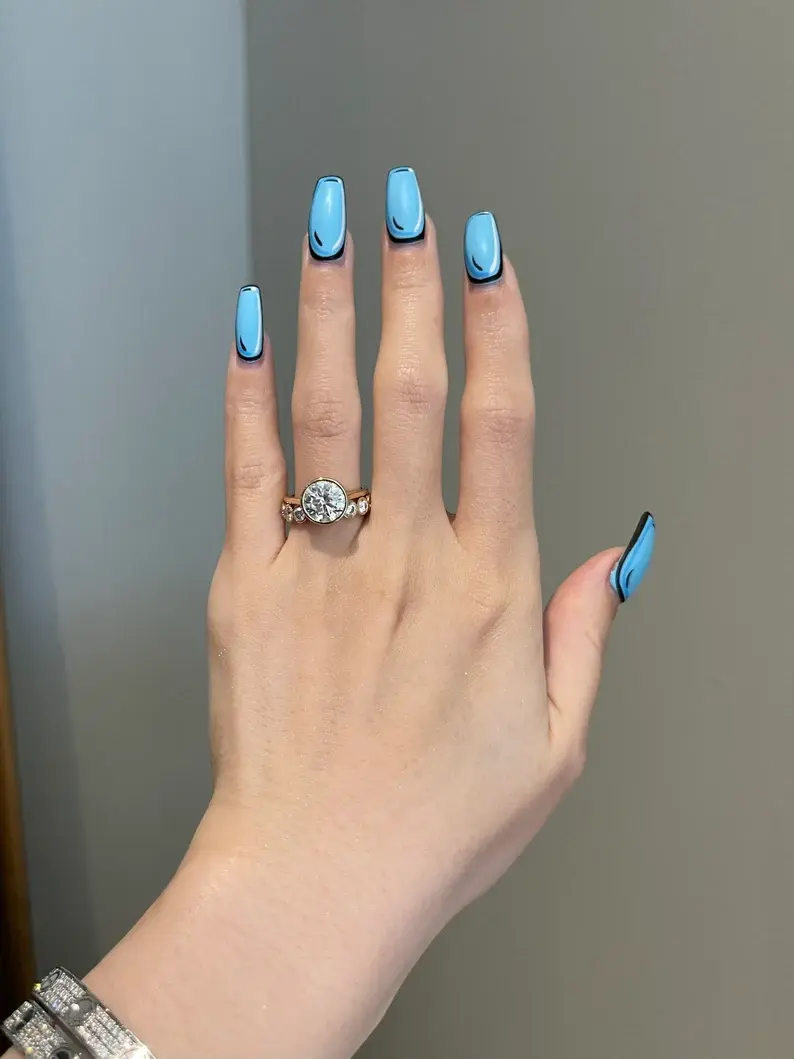
In practice:
Moissanite throws noticeable rainbow flashes, especially in sunlight and in larger sizes. People either love this or find it looks unlike a diamond.
Lab diamonds give the white, crisp scintillation people picture when they picture a diamond.
Under 1 carat the difference is subtle. Above 2 carats, moissanite's fire is clearly visible to an ordinary observer.
Hardness and daily wear
Diamond rates 10 on the Mohs scale, the hardest gemstone there is. Moissanite rates 9.25, harder than sapphire and well beyond what daily wear demands.
Both are genuinely suitable for an everyday ring. Neither will scratch in normal use. This is not the deciding factor.
Price: the real difference
This is where the two separate. Rough figures for a well-cut 2 carat round in a solid gold setting:
Mined diamond: $12,000 and up
Lab-grown diamond: roughly $1,500 to $3,000
Moissanite: roughly $1,000 to $1,800
Lab diamond prices have fallen sharply over the past few years as production has scaled, which has narrowed the gap with moissanite considerably. Check both before assuming moissanite is the budget option: at many sizes the lab diamond is closer than shoppers expect.
Resale and long-term value
Neither holds value well, and it is worth being clear about that. Lab-grown diamonds resell for a fraction of retail, and moissanite has effectively no secondary market.
If resale matters to you, the value in your ring is the solid gold, which is why the metal underneath is worth paying attention to.
How to choose
Choose a lab-grown diamond if:

You or your partner want a diamond, and the word matters
You prefer white brilliance to colorful fire
You want a certified stone with a graded report
You are buying a classic solitaire where a diamond look is expected
Browse lab-grown diamond engagement rings and lab diamond studs.
Choose moissanite if:
You want maximum size for your budget, particularly at 3 carats and above
You like a lot of fire and flash
You are comfortable with a stone that is not a diamond
You want a travel or everyday alternative to a more valuable ring
Browse moissanite engagement rings.
What matters more than the stone
Buyers spend weeks on this choice and minutes on the setting. That is backwards. The setting is what fails: prongs wear thin, plated metal flakes, and a soft shank bends out of round.
A stone in a solid gold setting, with the karat running all the way through, will still be wearable in thirty years. A stone in plated metal will not be. Whichever stone you choose, check the metal.
Frequently asked questions
Will people be able to tell it is not a mined diamond?
With a lab diamond, no. It is a diamond, and identification requires laboratory equipment. With moissanite, someone familiar with stones may notice the extra fire in bright light.
Does moissanite get cloudy over time?
No. Both stones may look dull when coated with soap film or lotion, and both clean up with warm water and a soft brush.
Are lab-grown diamonds certified?
Yes, typically by IGI, and graded on the same cut, color, clarity, and carat scale as mined diamonds.
Which is better for a bigger look on a budget?
Moissanite, particularly above 3 carats. Under 1.5 carats, the price gap is small enough that the choice should come down to preference.
Still deciding? Compare both in solid gold settings across our engagement ring collection.


Comments